# Critical UPC and IPC Trap Sizing Rules: What Every Texas Journeyman Must Memorize
I'm going to be straight with you: trap sizing questions are on the exam, and they're going to nail you if you don't lock in the numbers. I've prepped hundreds of Texas journeymen, and the ones who fail almost always stumble on trap diameter, trap arm length limits, and seal depth requirements. The good news? Both the 2018 UPC and 2018 IPC speak the same language on the essentials. Let me walk you through what you need to know.
Key facts
- The minimum trap arm diameter for most fixtures, including lavatories and kitchen sinks, is 1.25 inches per UPC 422.1 / IPC 1015.2.
- The maximum length of a trap arm is twice the diameter of the trap arm, per UPC 422.2 / IPC 1015.3.
- A 1.25-inch trap arm has a maximum unvented length of 2.5 feet, and a 1.5-inch trap arm has a maximum unvented length of 3 feet.
- The minimum trap water seal is 2 inches and the maximum is 4 inches, per UPC 422.3 / IPC 1015.4.
- The vertical drop from the trap outlet to the trap weir cannot exceed 24 inches without a vent, per UPC 422.2 / IPC 1015.3.
- The horizontal trap arm must slope at a minimum of 1/4 inch per foot toward the drain, per UPC 408.1 / IPC 1016.2.
Why Trap Sizing Matters on Your Exam
Before we get into the numbers, understand why this matters. A trap is the lowest point in a drainage system—it holds water to form a seal that blocks sewer gases and odors from entering the building. Get the sizing wrong, and that seal either fails or siphons out. On the exam, they'll ask you straightforward questions: "What's the minimum diameter for a trap arm?" or "How far can a trap arm run before you need a vent?" These aren't trick questions. They're testing whether you know the code cold.
Both the UPC (Uniform Plumbing Code) and IPC (International Plumbing Code) agree on the core rules. That's your advantage. You don't have to memorize two different systems—you need to know one, and it works for both.
Trap Arm Diameter: The Foundation Rule
Let's start with the base requirement. Both codes require that the trap arm diameter shall not be smaller than the outlet of the trap (UPC 422.1 / IPC 1015.2). That's intuitive—you can't reduce the pipe size below what's leaving the trap.
But here's the critical number you must memorize:
Minimum trap arm diameter for most fixtures: 1.25 inches (1¼")
This applies to:
- Lavatories
- Kitchen sinks
- Most residential fixtures
What about smaller fixtures? A 1.5-inch (1½") fixture might seem like it could use a 1.25-inch trap arm. Wrong. UPC 422.1 and IPC 1015.2 are clear: the trap arm can't be smaller than the trap outlet. A 1.5-inch outlet needs at least a 1.5-inch arm.
The Critical Trap Arm Length Rules
This is where I see exam failures. Every trap arm has a maximum length before it must be vented. The limit depends on diameter. Both codes use the same principle:
The maximum length of a trap arm is twice the diameter of the trap arm.
Let me break down the practical numbers:
| Trap Arm Diameter | Maximum Length (Before Vent Required) | |---|---| | 1.25" | 2.5 feet | | 1.5" | 3 feet | | 2" | 4 feet | | 3" | 6 feet | | 4" | 8 feet |
This comes straight from UPC 422.2 and IPC 1015.3. The 2:1 ratio is the golden rule. If your trap arm exceeds this length, you need a vent trap arm or a vent stack within the code distance.
Important exam tip: The question might ask about a 3-foot run on a 1.5-inch trap arm. That's exactly at the limit. Some exams phrase this as "is this allowed?" The answer is yes—it meets code. But if it's 3.1 feet, you're over, and you need a vent.
Trap Seal Depth and Crown Vent Requirements
Both the UPC and IPC require that traps hold water seal. The depth of that seal matters.
Minimum water seal: 2 inches Maximum water seal: 4 inches
This is found in UPC 422.3 and IPC 1015.4. Why does it matter? A seal shallower than 2 inches evaporates too quickly. Deeper than 4 inches, and siphoning becomes harder to prevent.
Now here's the crown vent rule—this trips people up:
A crown vent is a vent that connects to the trap arm at or above the crown (the highest point) of the trap. Both codes require that any trap arm longer than the standard 2:1 ratio must have a crown vent if a standard vent isn't available.
UPC 422.2 and IPC 1015.3 allow crown vents as an alternative to standard trap venting when trap arm length is excessive. But the crown vent must connect above the crown of the trap—connecting below the crown line defeats the purpose and violates code.
P-Trap Depth and Offset Rules
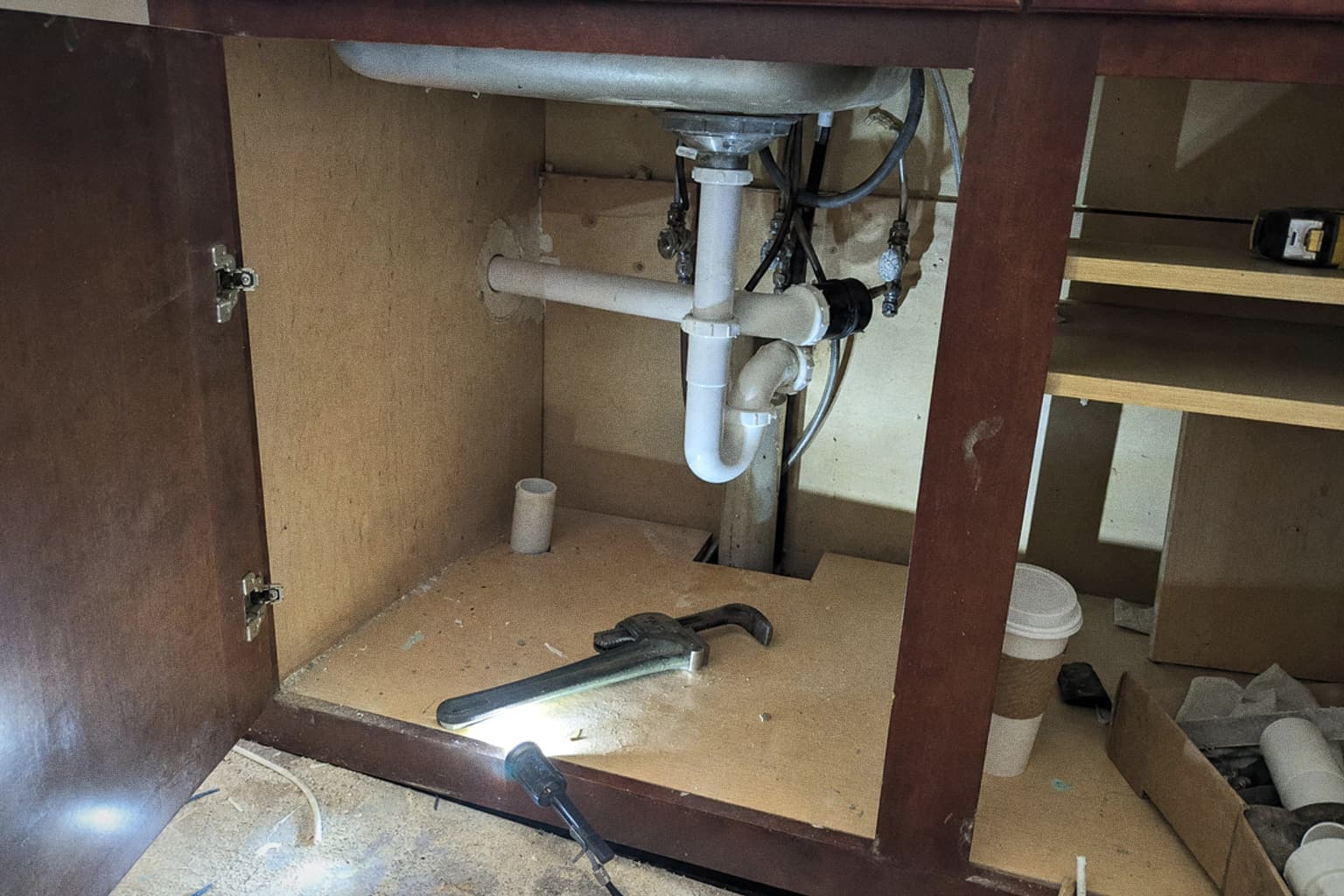
In Texas, you'll encounter a lot of under-sink installations with P-traps. Both codes allow P-traps, but with restrictions.
The vertical drop from the trap outlet to the trap weir (the lowest point of the outlet) cannot exceed 24 inches without a vent. This is UPC 422.2 and IPC 1015.3 language.
Why? A long vertical drop can siphon the seal. The vent prevents that by allowing air in.
Also remember: the horizontal section of the trap arm must be graded to maintain a minimum slope of 1/4 inch per foot (2% slope) toward the main stack or branch drain. Both codes enforce this (UPC 408.1 / IPC 1016.2). On your exam, if they describe a level trap arm, that's a violation.
The 3:1 Rule You Can't Forget
Here's a less obvious but exam-critical rule: the distance from the trap weir to the vent connection cannot exceed three times the diameter of the trap arm.
This is the 3:1 rule, and it's in both UPC 422.2 and IPC 1015.3. It prevents excessive trap arm length that would be vulnerable to siphoning even with a vent present.
So a 1.5-inch trap arm vented can be up to 6 feet long (3 × 1.5" = 4.5", which in feet is effectively 4.5 feet; the actual calculation is 3 times the diameter = 4.5 inches of slope, so roughly 3 to 4.5 feet depending on slope). But here's the catch: it depends on how you measure and what your vent outlet height is.
On the exam, memorize this: without a vent, the 2:1 rule applies. With a vent, the 3:1 rule applies, but check your distance carefully.
Common Trap Sizing Mistakes (and How to Avoid Them)
Mistake 1: Using 1-inch trap arms Both codes prohibit 1-inch trap arms for common fixtures. The minimum is 1.25 inches. Even if the fixture outlet is 1 inch, you must increase to 1.25 inches as the trap arm.
Mistake 2: Installing a 4-foot trap arm on 1.25-inch diameter At 1.25 inches, your limit is 2.5 feet without a vent. A 4-foot arm needs at least 1.5 inches diameter, or a vent within 2.5 feet.
Mistake 3: Venting below the crown A crown vent must connect above the crown of the trap. Below the crown, it doesn't work. Both codes reject this.
Mistake 4: Forgetting the slope requirement Even with proper diameter and length, the trap arm must slope toward the drain. A level arm violates both codes.
Mistake 5: Installing a trap seal deeper than 4 inches Over 4 inches, the seal becomes unstable and harder to maintain. Both codes set the maximum at 4 inches.
Memorize These UPC/IPC Section Numbers
For your closed-book exam, you won't have the code, so these sections are for study purposes—lock them in your brain:
- UPC 422.1 / IPC 1015.2: Trap arm diameter requirements
- UPC 422.2 / IPC 1015.3: Trap arm length and venting rules
- UPC 422.3 / IPC 1015.4: Trap seal depth
- UPC 408.1 / IPC 1016.2: Slope and grade requirements
What Both Codes Agree On (and What Doesn't Change)
The beauty of trap sizing is that UPC and IPC are aligned on the critical numbers. You don't need to flip between two different standards. Both require:
- 1.25-inch minimum trap arm diameter (unless fixture outlet is larger)
- 2-inch minimum trap seal
- 4-inch maximum trap seal
- 2:1 ratio for unvented trap arm length
- 3:1 ratio for vented trap arm length
- 1/4 inch per foot slope on all horizontal trap arms
- Crown vents connecting above the trap crown
Final Study Tip
Create a flashcard for each rule. On one side, write the rule (e.g., "What is the maximum unvented trap arm length for 1.5-inch diameter?"). On the other, write the answer and the code section ("3 feet; UPC 422.2 / IPC 1015.3"). Run through them daily for two weeks before your exam. This isn't complicated—it's just numbers you need to own.
You've got this. Lock in the trap sizing rules, and you'll have an advantage on test day.
Common questions
What is the minimum trap arm diameter under the UPC and IPC?
The minimum trap arm diameter for most fixtures, such as lavatories and kitchen sinks, is 1.25 inches under UPC 422.1 and IPC 1015.2. The trap arm also can never be smaller than the outlet of the trap it serves. If a fixture outlet is larger than 1.25 inches, such as 1.5 inches, the trap arm must match that larger size.
How long can a trap arm run before it needs a vent?
The maximum unvented length of a trap arm is twice its diameter, under UPC 422.2 and IPC 1015.3. That works out to 2.5 feet for a 1.25-inch trap arm, 3 feet for 1.5 inches, 4 feet for 2 inches, 6 feet for 3 inches, and 8 feet for 4 inches. A run exactly at the limit, such as 3 feet on a 1.5-inch arm, still meets code, but anything past that limit requires a vent.
What are the minimum and maximum trap seal depths?
Under UPC 422.3 and IPC 1015.4, a trap must hold a water seal of at least 2 inches and no more than 4 inches. A seal shallower than 2 inches evaporates too quickly, and a seal deeper than 4 inches becomes harder to keep from siphoning.
What is a crown vent and where does it have to connect?
A crown vent is a vent that connects to the trap arm at or above the crown, the highest point, of the trap. Both codes allow a crown vent as an alternative to standard trap venting when the trap arm length exceeds the standard 2:1 ratio, under UPC 422.2 and IPC 1015.3. Connecting the vent below the crown line defeats its purpose and violates the code.
Does a trap arm need to slope, and by how much?
Yes. The horizontal section of a trap arm must be graded at a minimum slope of 1/4 inch per foot, which is a 2% slope, toward the main stack or branch drain, under UPC 408.1 and IPC 1016.2. A level trap arm is a code violation even if the diameter and length are otherwise correct.